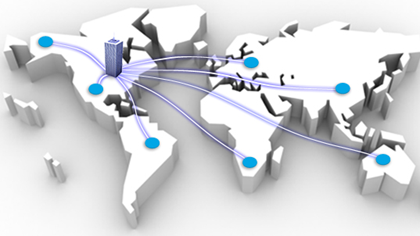

Multi Company and Global Operations

Sage 300 Multi-Company • Multi-Currency • Global Operations

Manage Multi-Company and Global Operations with Sage 300

Sage 300 helps growing businesses manage multiple companies, currencies, locations and reporting structures from one scalable ERP platform. It gives finance and operations teams better visibility, stronger control and a more consistent way to manage regional or group-wide business performance.

Why Multi-Company Businesses Need More Than Basic Accounting Software

As businesses expand across entities, branches, countries or brands, finance teams often face growing complexity. Separate accounting files, inconsistent reporting formats, manual consolidation and currency handling can make it difficult to understand true group performance.

Sage 300 provides a structured ERP foundation for companies that operate across multiple entities, currencies and locations.

With multi-company, multi-currency and financial management capabilities, Sage 300 helps businesses centralise information, reduce manual work and improve visibility across group operations.

Real-World Pain Points Sage 300 Helps Solve

Sage 300 supports businesses that need stronger control over finance, reporting and operations across multiple companies or markets.

01

Disconnected Company Accounts

When each entity runs its own separate accounting process, group finance teams spend too much time collecting, checking and combining data. Sage 300 helps centralise company information while allowing each entity to maintain its own financial records.

02

Manual Group Reporting

Manual consolidation using spreadsheets increases the risk of errors, version confusion and delayed reporting. Sage 300 helps improve reporting consistency across companies, departments and locations.

03

Multi-Currency Complexity

Regional businesses often manage transactions in different currencies. Sage 300 supports multi-currency accounting so finance teams can better manage exchange rates, foreign currency transactions and financial reporting.

04

Inconsistent Chart of Accounts

Different account structures across entities can make group analysis difficult. Sage 300 supports structured account segments and reporting designs that help standardise financial visibility.

05

Limited Visibility Across Locations

Business leaders need timely insight into sales, expenses, cash flow and profitability across branches or subsidiaries. Sage 300 helps provide a clearer view of performance across the organisation.

06

Inter-Company Transaction Challenges

Transactions between related companies can be difficult to track manually. Sage 300 can support more structured inter-company processes to improve accuracy, accountability and audit readiness.

Sage 300 Capabilities for Multi-Company and Global Operations

Sage 300 gives businesses the flexibility to manage complex structures while maintaining financial control and operational visibility.

Unlimited Companies

Manage multiple legal entities, subsidiaries, branches or business units while keeping records organised and accessible.

Multi-Currency Accounting

Process transactions in different currencies and support businesses operating across regional or international markets.

Account Segmentation

Structure accounts by department, division, location, project or other business dimensions to improve reporting clarity.

Financial Consolidation

Support group-level reporting and improve visibility across multiple companies or entities.

Inter-Company Transactions

Improve the management of transactions between related companies and reduce manual reconciliation effort.

Regional Reporting

Generate reports that help management compare performance across companies, countries, branches or business units.

Business Scenarios Where Sage 300 Adds Value

Sage 300 is well suited for organisations that need to manage complexity without losing financial control.

Group Companies

Businesses with several related companies can improve visibility, reporting consistency and financial governance across the group.

Regional Operations

Companies operating in multiple countries can better manage currencies, entities, tax considerations and management reporting.

Branch-Based Businesses

Organisations with multiple branches or locations can track performance more clearly and reduce fragmented reporting.

How Sage 300 Improves Control Across Business Entities

Multi-company operations require more than transaction processing. They need structure, visibility and reliable reporting.

01

Standardise Financial Structure

Define account structures, segments, currencies and reporting requirements to support consistent finance operations.

02

Centralise Operational Data

Bring finance, sales, purchasing, inventory and company-level information into a more connected ERP environment.

03

Improve Reporting Visibility

Generate clearer reports for management review, entity performance, cash flow, profitability and group-level analysis.

04

Support Future Expansion

Add users, entities, locations and operational modules as the business grows without rebuilding the finance system from scratch.

Key Outcomes for Multi-Company and Global Businesses

Sage 300 helps leadership teams gain better control over growing business structures.

  • Reduce manual consolidation and spreadsheet dependency.
  • Improve reporting consistency across companies and locations.
  • Manage multi-currency transactions with better control.
  • Strengthen visibility into group-level financial performance.
  • Improve audit readiness and transaction traceability.
  • Support expansion into new entities, branches or regional markets.

Frequently Asked Questions

Common questions about Sage 300 for multi-company and global operations.

Can Sage 300 support multiple companies?

Yes. Sage 300 is designed to support businesses that manage multiple companies or entities, making it suitable for group companies, subsidiaries and regional operations.

Does Sage 300 support multi-currency accounting?

Yes. Sage 300 supports multi-currency accounting, helping businesses process transactions, manage exchange rates and report across different currencies.

Can Sage 300 help with financial consolidation?

Yes. Sage 300 can support consolidation requirements, especially for businesses that need to report across multiple entities or business units.

Is Sage 300 suitable for regional businesses?

Yes. Sage 300 is suitable for regional businesses that need to manage multiple companies, currencies, locations and operational workflows from a scalable ERP platform.

Can Databit help design a multi-company Sage 300 setup?

Yes. Databit can help assess your business structure, reporting requirements, chart of accounts, inter-company needs and implementation approach for Sage 300.

Ready to Simplify Multi-Company Operations with Sage 300?

Databit can help your business review its group structure, reporting challenges, currency requirements and operational workflows to design the right Sage 300 solution.

Call +65 6334 0388  to speak with a Sage 300 Consultant